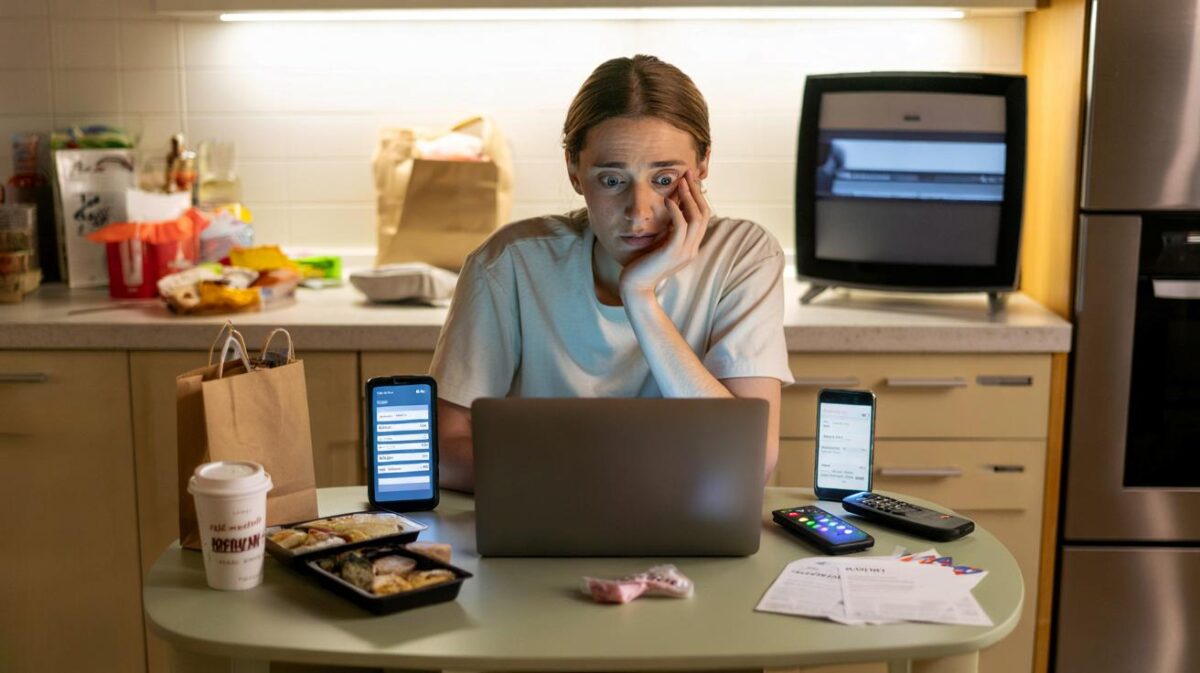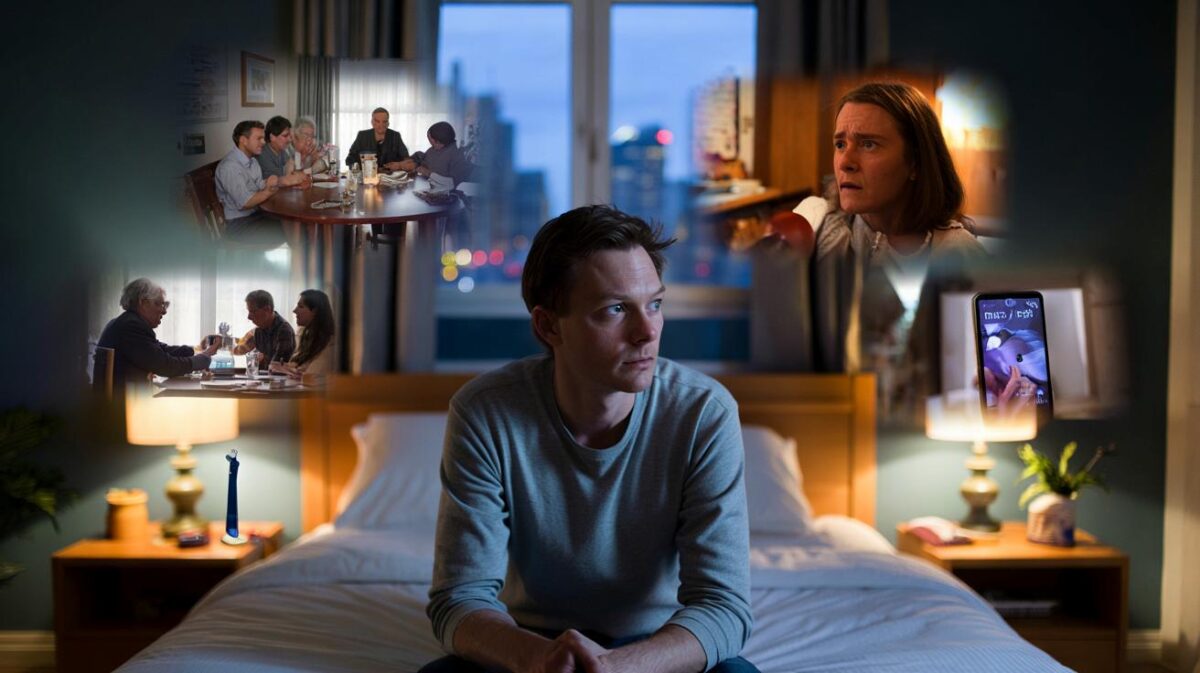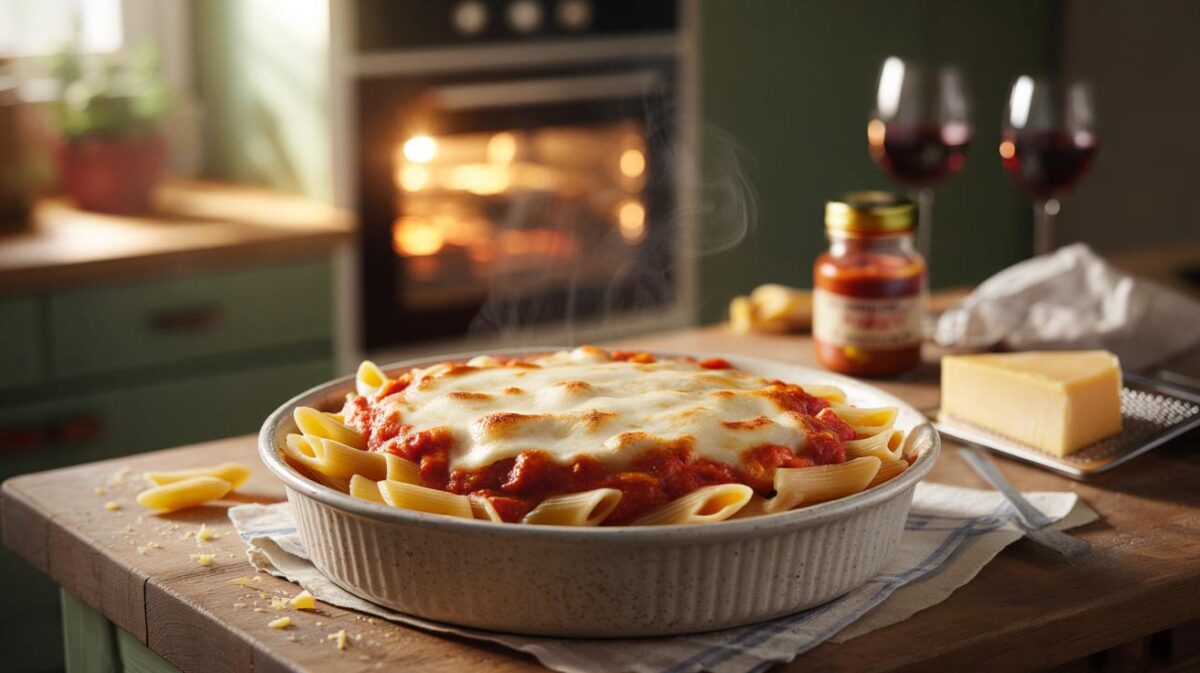
You’re standing in the supermarket, staring at shelves of tomato sauce. Basil, no basil. Chunky, smooth. Organic, low-sugar, family pack, glass jar, squeeze bottle. You just wanted pasta. Suddenly your brain feels like it’s wading through wet concrete.
You sigh, grab something random, and feel oddly drained for such a tiny decision. On the way home, even choosing a playlist feels like work.
By the time someone asks “What do you want for dinner this weekend?” you want to lie down on the floor.
The strange part is, nothing dramatic happened. You just lived a normal day.
Still, the weight of every small choice has quietly doubled.
There’s one tiny habit behind that heaviness that almost nobody notices.
The invisible habit that exhausts your decision-making
Scroll back through your last normal day. The one where you wake up, grab your phone, and without even thinking, start your morning with a feed of other people’s lives. Before your body has fully left sleep, you’ve already voted on ten micro-choices with your thumb: this post, not that one, this headline, not that video.
That thumb movement feels like nothing, but it teaches your brain one thing, over and over: everything is a decision. Every swipe is a tiny “yes” or “no” your mind has to process, label, store. It’s like waking up and going straight into a mental obstacle course, still in your pyjamas.
Picture this. A marketing manager named Laura wakes up at 6:45 a.m., meaning to have a “slow morning”. Instead, she taps open three apps in a row. She doesn’t even read deeply. Just skims, scrolls, pauses, likes, skips.
Twenty minutes later she’s already approved a colleague’s story in Slack, reacted to a friend’s vacation photo, decided whether to open five different news alerts, and compared two workout videos she probably won’t do. None of that felt like work. Still, by 9 a.m. she’s weirdly irritated when someone asks her to decide between two meeting times.
➡️ This profession provides income growth through specialization, not job hopping
➡️ This is why some days feel heavier than others, even without stress
➡️ If you feel unsettled when there’s nothing to fix, psychology explains the discomfort
➡️ This habit quietly drains clarity during routine moments
➡️ If you feel tension when things go smoothly, psychology explains the internal expectation
➡️ Most people sit in a way that creates fatigue, this adjustment helps
➡️ This is why your home feels cluttered even after tidying
➡️ “I thought my budget failed because of emergencies, it was something else”
Her brain hasn’t had a break from confronting options since the minute she woke up.
There’s a name for what starts to creep in here: decision fatigue. Your brain has a finite daily budget of clear, fresh decisions. When you spend that budget on micro-choices early and constantly, real-life decisions feel heavier than they should.
This is where the tiny habit appears: constantly leaving options open “just in case”. Keeping 23 tabs instead of two. Letting 47 notifications live on your lock screen. Opening three apps every time you feel a two-second pause. *Your brain never gets to rest on rails; it’s always walking into a buffet.*
Over time, that habit trains you to treat every moment like a new fork in the road, even when you could simply glide.
Shifting from “infinite options” to gentle autopilot
The smallest, most underrated move is this: pre-decide boring things once so you don’t have to decide them every day. It sounds dull. It’s secretly powerful.
For example, you can create a “default morning sequence” that runs almost on autopilot: water, stretch for two minutes, open blinds, coffee, quick breakfast, then and only then touch your phone. One script. No negotiation.
What you’re doing here is cutting out early-morning micro-decisions that leak energy. Not “Should I stretch?” but “I stretch.” Not “What will I have for breakfast?” but the same snack on weekdays, with variation saved for weekends. **Your brain loves predictable loops more than it loves endless choice.**
One reader I spoke to tried a tiny experiment: she picked a “weekday outfit formula” for the office. Same basic pieces, same shoes, minimal jewelry. Nothing extreme, just fewer options.
At first she worried it would feel boring or restrictive. Instead, she noticed something else. By 10 a.m., she wasn’t already mentally tired. She hadn’t spent energy on “Is this shirt flattering?” or “Do these shoes work with this jacket?” The decisions were already done, quietly, in the background.
When her team threw a last-minute problem at her, she had bandwidth left. The problem didn’t feel like a monster. It felt like… a problem.
Logic-wise, this is simple. Every choice has a cognitive cost, even tiny ones. Your brain doesn’t invoice you for each micro-decision, but the bill arrives mid-afternoon when you’re suddenly too tired to send a two-line email.
The open-ended habit — always keeping doors ajar, resisting any kind of routine — feels like freedom on the surface. Underneath, it means every snack, every break, every pause requires thinking. Let’s be honest: nobody really does this every single day without paying for it somewhere.
When you build a handful of gentle defaults, you’re not killing spontaneity. You’re protecting it for moments that actually deserve it.
How to lighten your choices without living like a robot
Start with one place where your day always feels heavier than it should. Not your whole life. Just one recurring decision that annoys you.
Maybe it’s lunch. Maybe it’s what to do after work. Maybe it’s the nightly “What should I watch?” spiral. Pick that single zone and set a 7-day default. For a week, lunch is either yesterday’s leftovers or a short list of two quick options. After work, you either walk, call a friend, or lie on the couch with a book — pre-chosen menu, no endless scrolling.
You’re not aiming for perfection. You’re testing what happens to your mental weather when that one decision quietly disappears.
The biggest trap is thinking you have to redesign your entire personality overnight. That’s when people go all-in on rigid routines they secretly hate, then crash back into chaos. Don’t do that to yourself.
The other common mistake is using your new “defaults” as a stick to beat yourself with. You miss a day and suddenly you’re “bad at habits” again. That guilt is heavier than the decision ever was. Instead, treat defaults like a friend gently holding a door open. Some days you walk through. Some days you don’t.
If you notice resistance, that’s not failure. That’s data. It’s your mind saying, “This default doesn’t fit me yet.”
“I thought discipline meant forcing myself to decide better,” a psychiatrist told me. “Now I see it’s mostly about deciding less where it doesn’t really matter, so I can be present where it does.”
- Create one **“no-brainer breakfast”** you eat on autopilot Monday to Friday.
- Pick a fixed start and end time for screen use in the morning.
- Limit your wardrobe into 2–3 weekday combinations you actually like.
- Use a “tiny menu” rule at night: only three options for what to do, not twelve.
- Audit your phone: which apps pull you into constant micro-decisions the second you’re bored?
When choices feel lighter, life feels bigger
Once you start noticing how many times a day you ask yourself “This or that?”, the picture shifts. The heavy feeling around everyday choices isn’t a personal weakness. It’s often the shadow of a life filled with open tabs, open loops, and open doors that never fully close.
You don’t need a military-grade routine. Most people just need a few soft rails for the boring parts, and a bit less digital noise pretending to be urgency. That tiny habit of constantly keeping your options open can slowly be swapped for another one: trusting a handful of defaults you chose on a calm day.
What’s interesting is what appears in the space you free up. Some people notice they’re less snappy with their kids. Others finally have patience for a hobby that doesn’t fit into a three-second clip. When choosing isn’t so exhausting, wanting becomes clearer.
That might be the real point: not to escape decisions, but to feel enough lightness to make the ones that actually matter.
| Key point | Detail | Value for the reader |
|---|---|---|
| Hidden habit | Constant micro-decisions and open options drain mental energy | Names the invisible source of “heavy” everyday choices |
| Gentle defaults | Pre-deciding routines for low-stakes areas like mornings, outfits, meals | Offers a practical way to reduce decision fatigue without rigidity |
| Small experiments | Test one 7-day default in a single life area and observe the effect | Makes change feel doable, not overwhelming, and encourages self-observation |
FAQ:
- Question 1What exactly is the “tiny habit” that makes choices feel heavier?
It’s the reflex of constantly keeping options open and engaging in endless micro-decisions — from scrolling first thing in the morning to never setting simple defaults for meals, clothes, or routines.- Question 2Does reducing decisions mean I’ll become boring or lose spontaneity?
Not at all. You’re only simplifying low-stakes areas so you have more energy for real spontaneity in things you actually care about, like trips, projects, or time with people.- Question 3How fast can I expect to feel a difference if I try this?
Many people notice a lighter feeling within a week of setting one or two clear defaults, especially around mornings or screens. The shift is subtle but surprisingly tangible.- Question 4What if my job already demands a lot of decisions every day?
Then this approach is even more useful. Offload as many personal, repetitive decisions as you can — outfits, lunches, morning routines — so your professional decisions get your best energy.- Question 5Can I still change my mind if I’ve set a default routine?
Of course. Defaults are starting points, not handcuffs. They exist so you don’t have to think when you’re tired, but you can override them any time you genuinely want something different.